© 2025–2026 Falian Wanlin. All rights reserved. This is original content. Quotation is welcome provided that the source and link are clearly acknowledged. Full reproduction and commercial use without authorization is prohibited.
A Reflection on How the Universe Works
I keep returning to one question:
If souls truly exist in the universe, why do they enter life?
In my view, souls may come from a shared source. What that source really is, I do not know.
It may be something like a spring, an energy source that continuously gives rise to souls.
All souls that emerge from that source should, in essence, be equal.
A soul has no gender, no size, and no built in hierarchy. A soul attached to a human being is not inherently more noble than one attached to an insect.
The vessel may differ, but the soul itself should be of the same nature.
This is also one way I understand the idea that all beings are equal.
Soul and Life
To me, life and soul are not exactly the same thing.
Where there is life, there is usually a soul. But where there is a soul, there is not always biological life.
Some states of existence may contain only the soul, without a biological form of life. Certain realms mentioned in Buddhist scripture, such as hell or the hungry ghost realm, may belong to this kind of state.
Life is only a vessel.
A soul can pass through different vessels and take on different roles. In the human world it plays one role. In the animal world it plays another.
Each reincarnation is like a new stage of experience.
The Universe as a Field of Experience
If souls come from a common source, then once they leave that source, they may move through many different environments in the universe.
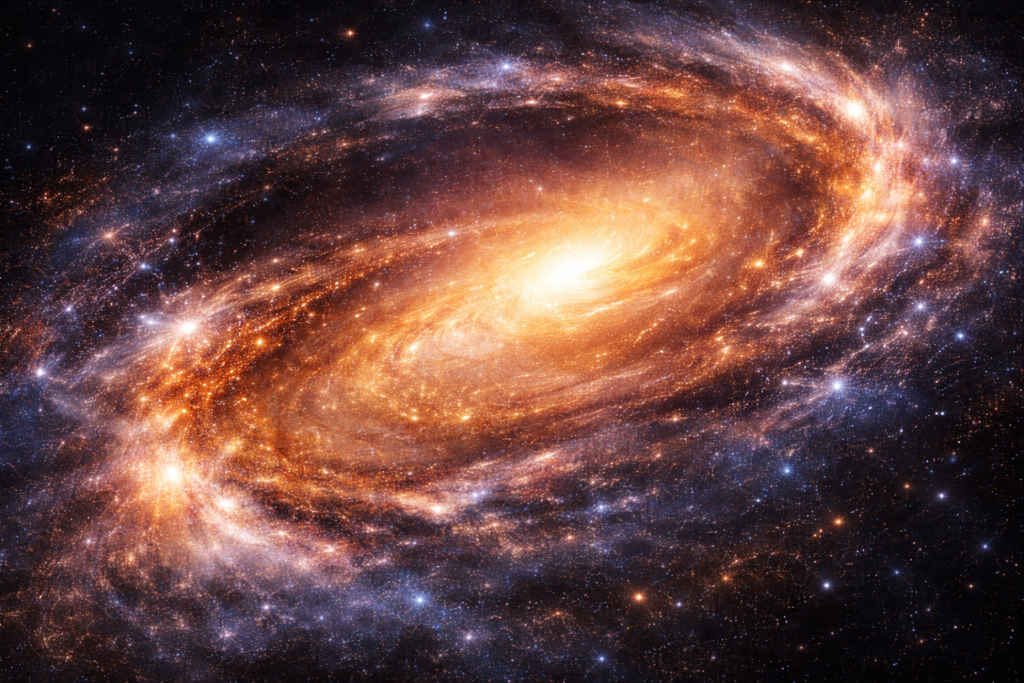
I tend to think of the universe as a field of experience.
Our solar system may be only one hidden realm among countless life bearing domains in the cosmos. As far as we currently know, Earth is the only confirmed place where life exists, which may mean that the entire solar system forms a single life system.
Yet Buddhist scripture speaks of “three thousand great thousand worlds,” suggesting that the universe contains innumerable worlds.
Earth is only a small stage.
Freedom and Rules
If the soul possesses freedom, then another question follows:
Can freedom exist without any limits?
My answer is no.
Freedom without rules is dangerous.
If every being could act however it wished, the universe would quickly fall into disorder. Actions that harm others and actions that destroy balance would spread without restraint.
For that reason, the universe likely already contains certain fundamental rules.
Once the soul leaves its source, it enters a universe governed by rules.
The First Choice
Within this line of thought, the earliest choice the soul faces may not be whether to exist.
It may instead be this:
Whether to follow the rules and make choices within freedom.
Freedom still exists, but it must operate within rules.
Causality
Once the soul makes a choice, consequences begin to unfold.
In my view, many things can be understood through one simple chain:
Choice → Karma → Cause → Karmic System → Destiny → Result
This is what I call the Falian Causal Seed Model.
Within this model, causality is not a religious slogan meant to encourage people to behave well. It is a law of how life operates.
Freedom without rules produces risk, and risk accumulates into cause. When conditions ripen, cause becomes result.
Formation, Stability, Decline, and Emptiness
Buddhism also offers a structural view of how worlds move:
Formation Stability Decline Emptiness
A world comes into being, endures for a time, begins to decay, and eventually returns to emptiness.
This is a cycle.
It also resonates with the observation that when things reach an extreme, they begin to reverse.
Once something develops to its furthest point, it starts moving in the opposite direction.
The Dharma Decline Age and the Seven National Calamities
Buddhist scripture also speaks of the Dharma Decline Age and the Seven National Calamities.
If these descriptions reflect part of the laws of the universe, then certain disasters and periods of turmoil may simply be one phase in a larger historical cycle.
But as long as events have not reached their final stage, it is difficult to make absolute claims.
So even when signs of decline appear in the world, it is still too early to declare the ending.
The appearance of decay does not mean the final outcome has already been fixed.
Return
Buddhist teaching speaks of nirvana.
Shakyamuni Buddha said that he returned to nirvana.
If souls truly come from some source, then the end of reincarnation may be a return.
The soul leaves its source, moves through different roles and forms of life across the universe, and in the end returns to where it began.
Whether that source is the same as nirvana is still difficult to determine.
Both possibilities remain open.
Conclusion
These reflections are still part of an ongoing exploration.
I do not know the final answer to the universe.
But at least from where I stand now, I am inclined to believe this:
The universe has rules. The soul possesses freedom. And every result follows from the causality set in motion by choice.
Note
The following is the original scriptural passage on the Seven National Calamities from the Medicine Buddha Sutra:
“When consecrated Kshatriya kings encounter disasters, these may include epidemics among the people, invasion from foreign lands, rebellion within their own realm, strange disturbances among the stars, eclipses of the sun and moon, storms and rains arriving out of season, and drought when rain should come.”
Keywords
Soul, Freedom, Rules, Causality, Soul Theory, Falian Wanlin, Falian Causal Seed Model, Choice, Karma, Karmic System, Destiny, Reincarnation, Nirvana, Dharma Decline Age, Seven National Calamities, Medicine Buddha Sutra, Buddhist Thought, Cosmic Order, Law of Life, Field of Experience